With Grade-A retail vacancy dipping below 4% across top Indian metros in 2025-2026, mall CAM charges and revenue-share minimum guarantees have surged by 18-22%, making prime high-street commercial spots the preferred choice for lean food brands. Evaluating mall vs high street food dynamics is no longer just about counting footfall. It is about understanding who actually keeps the profit at the end of the month.
Mall vs high street food dynamics: The hidden economics of retail spaces
Last month, an aspiring restaurateur in Ahmedabad showed me his commercial lease options. Option A was a compact 180-square-foot stall in a buzzing Tier-1 mall food court. Option B was a 250-square-foot storefront on a bustling high street near two major universities. On paper, the mall looked tempting with its air-conditioned corridors and steady weekend family traffic. But the real numbers tell a brutal story.
Food court operations inside major shopping centers come loaded with complex lease covenants. You do not just pay base rent. Operators face Common Area Maintenance (CAM) charges that run anywhere between ₹80 and ₹250 per square foot every month. Add in centralized air conditioning surcharges, trash removal tariffs, grease trap clearance fees, and compulsory valet contributions. Before selling a single plate of fries, your fixed operational expenses skyrocket.
Here’s the thing — malls almost universally enforce a Minimum Guarantee versus Revenue Share clause. If your food kiosk generates ₹8,00,000 in monthly sales, the mall management takes whichever is higher: the fixed base rent or 12% to 18% of your gross turnover. That revenue cut bites straight into your operational margins. According to recent India food industry data (IBEF), consumer demand for fast casuals is surging across urban and semi-urban pockets. Yet mall food court tenants regularly struggle with cash flow because high operational overhead drains their working capital.
High streets, on the other hand, run on transparent commercial leases. You sign a standard commercial rental agreement with a private landlord. There are no surprise CAM inflations. You control your operating hours, opening early for breakfast or running late into the night for college crowds. Read our detailed breakdown of market shifts on our industry insights blog to see how footfall behavior has transitioned toward local commercial strips.
Mall vs high street food investment breakdown: Where capital actually goes
Securing the best location for food business in india requires a realistic look at your total setup outlays. A food outlet commercial lease india in a mall requires extensive upfront compliance before you can unlock the front counter. Most Grade-A malls mandate that you work exclusively with their approved MEP (mechanical, electrical, plumbing) contractors. These pre-approved vendors frequently bill at double the market rate for standard fire suppression, ducting, and electrical trunking setups.
The honest truth is that a standard food court franchise cost india regularly breaches the ₹25,00,000 to ₹40,00,000 threshold. In stark contrast, a high street food franchise rent model offers predictable setup costs and sensible security deposits. You negotiate security deposits directly with individual property owners, generally totaling three to six months of rent instead of the steep institutional deposits demanded by mall developers.
Let us look at the actual balance sheet comparison for opening a fast-food counter under both formats:
| Financial & Operational Parameter | Mall Food Court Kiosk (150-200 sq. ft.) | High Street Quick-Service Outlet (150-300 sq. ft.) |
|---|---|---|
| Initial Security Deposit | ₹6,00,000 – ₹12,00,000 (Institutional terms) | ₹1,50,000 – ₹3,50,000 (Direct owner terms) |
| Base Interior & Kitchen Fit-out | ₹12,00,000 – ₹18,00,000 (Mandatory vendors) | ₹2,50,000 – ₹3,50,000 (Independent contractors) |
| Monthly Base Rent & CAM | ₹1,20,000 – ₹2,50,000 + ₹30,000 CAM | ₹35,000 – ₹75,000 (Zero CAM charges) |
| Revenue Sharing Deductions | 12% to 18% of monthly gross revenue | 0% (Franchisee retains 100% of top-line) |
| Operating Hours Flexibility | Restricted to mall timings (11 AM – 11 PM) | Flexible (Ideal for 11 AM – 2 AM delivery shifts) |
| Total Initial Capex Exposure | ₹25,00,000 – ₹40,00,000+ | ₹6,00,000 – ₹8,00,000 (Full turnkey setup) |
And this is where it gets interesting: delivery revenue. Food aggregators generate up to 40% of modern fast-food volumes. In a high-street location, delivery riders pull up straight to your store curb, pick up the hot parcel, and depart within three minutes. Inside a mall, delivery personnel must park, clear security check-ins, ride freight elevators to the third floor, wait for food packaging, and walk back. That friction leads to delayed delivery times, cold food complaints, and frustrated drivers cancelling pickup runs.
Why Cheese Corner India’s high-street model protects your profit margins
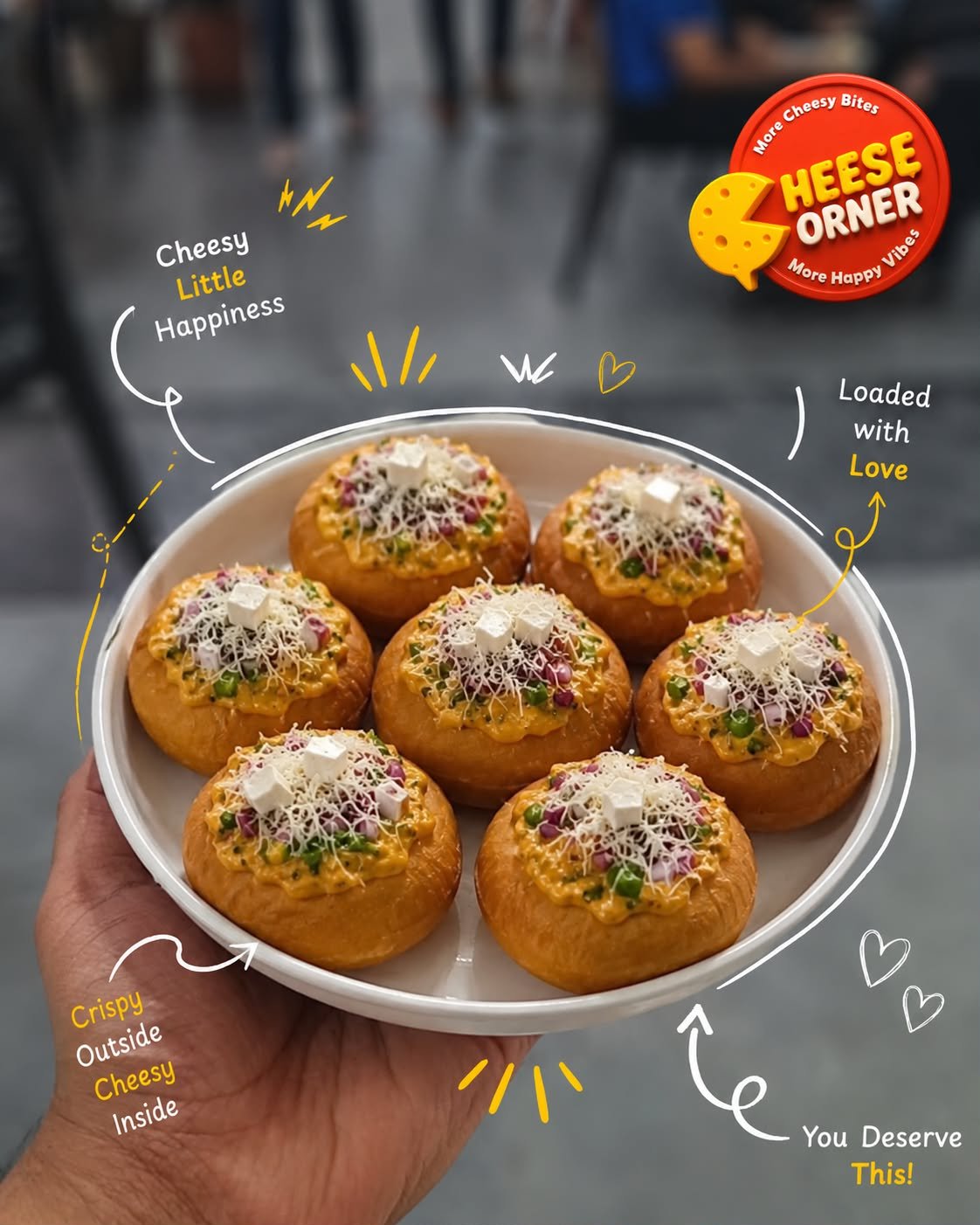
High-street commercial success requires a menu built for volume and speed. Cheese Corner India specializes in cheesy fusion fast food. Every single item on the Cheese Corner India menu is priced at flat ₹99. This pocket-friendly pricing strategy creates massive appeal for college students, office workers, and young families who want quick, indulgent comfort meals without spending hundreds of rupees.
Cheese Corner India is backed by ZORKO Limited, a prominent food enterprise seen on Shark Tank India. The operational model is engineered specifically to eliminate traditional franchisor friction. Cheese Corner India charges zero royalty fees. The franchise owner retains 100% of the operational profits generated by their unit. If you want to explore how our financial framework beats traditional QSR contracts, read about our profitable zero-royalty food franchise opportunities across Indian markets.
The unit economics are simple and transparent. Cheese Corner India’s base franchise package costs ₹3,99,000 plus GST. This franchise package includes full kitchen equipment and machinery. The package includes an initial marketing and promotional package valued at ₹25,000. It includes POS billing software. It includes a comprehensive staff training program and an initial starter kit. Cheese Corner India estimates initial raw material stock at ₹50,000. Interior decoration and seating furniture typically cost between ₹2.5 lakh and ₹3.5 lakh based on the owner’s choice. The total all-in investment for a Cheese Corner India Cafe model stands between ₹6 lakhs and ₹7 lakhs. You can review the company vision and background on our leadership and brand story page.
How to launch a Cheese Corner India franchise on a high street
Launching a high-street food business does not require months of commercial red tape. Cheese Corner India utilizes a structured onboarding pathway to get new units operational quickly and efficiently.
First, identify a high-density pedestrian zone in your target locality. Look for commercial high streets situated near colleges, coaching institutes, corporate complexes, or vibrant residential neighborhoods. Cheese Corner India’s expansion team reviews your shortlisted site to evaluate footfall quality, delivery radius coverage, and curb accessibility.
Second, finalize your commercial agreements and complete the documentation. Once the franchise agreement is executed, Cheese Corner India dispatches the kitchen machinery, POS software, and standard operating blueprints directly to your location. During this phase, you execute your interior fit-out within the guided ₹2.5 to ₹3.5 lakh budget.
Third, kitchen staff undergoes complete recipe and operational training. Cheese Corner India equips your kitchen crew with standardized sauce-dispensing routines and cooking processes. This standardized workflow ensures consistent food taste across every cheesy pizza, loaded fries, and burger on the ₹99 menu.
Finally, your location launches with coordinated marketing support. Cheese Corner India deploys the ₹25,000 launch promotional package to build immediate neighborhood awareness across local social media and delivery platforms. If you are ready to evaluate territory availability in your city, connect directly with the expansion desk via WhatsApp at 9274417550 or submit an inquiry through the official cheesecornerindia.com web portal.
Is a mall vs high street food outlet cheaper to start in India?
A high street food outlet is substantially cheaper to set up in India, typically requiring ₹6-10 lakhs total capex compared to ₹25-40 lakhs for a mall food court stall due to zero CAM charges, lower deposits, and no mandatory interior vendor markups.
What are the common hidden costs in a mall food court lease?
Common hidden costs include monthly Common Area Maintenance (CAM) charges ranging from ₹80 to ₹250 per sq. ft., 10-18% revenue-share kickers, shared scullery utility fees, compulsory central POS hardware integrations, and peak-hour HVAC surcharges.
Can a ₹99 fast-food franchise be profitable in a high-street location?
Yes, a ₹99 fast-food model like Cheese Corner thrives in high-street markets because independent street operations avoid revenue-share royalties and mall management cuts, preserving a 50-60% gross margin on steady local delivery and student pedestrian volumes.
If you have been hunting for commercial space and feel overwhelmed by institutional mall leases, take a breath. High-street retail continues to build sustainable personal wealth for independent operators who value operational freedom. Take a close look at our independent business franchise model, run the numbers for your own town, and drop us a message on WhatsApp at 9274417550 whenever you want to talk shop.